
Author of GodotAwesome. She is creating valuable, reader-friendly content for the GodotAwesome community!.
Slay the Spire 2 on Godot: Millions of Players After the Unity Switch
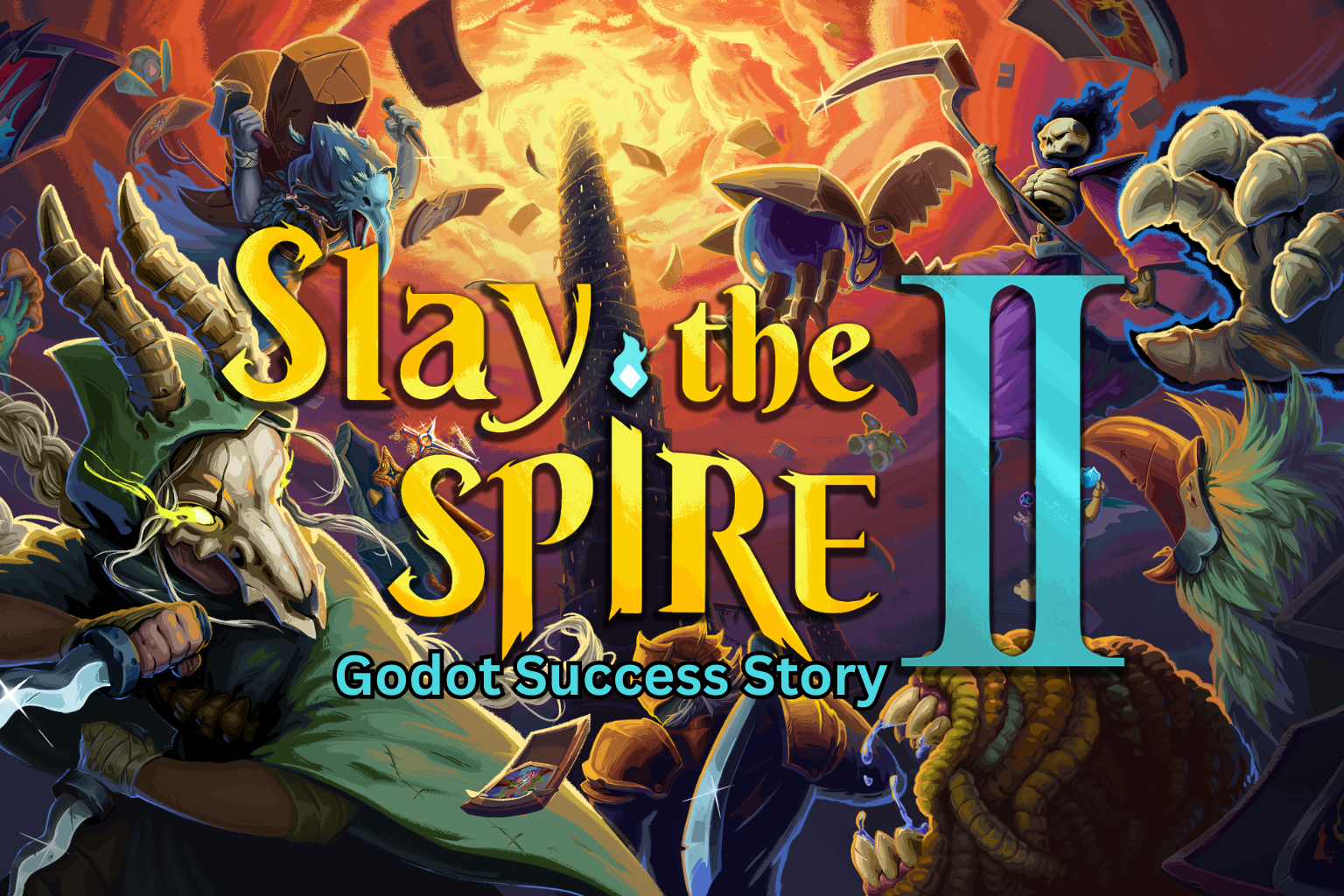
Slay the Spire 2 is one of the clearest commercial signals Godot has had in years.
Mega Crit rebuilt the sequel on Godot after the Unity runtime-fee mess, shipped into Steam Early Access, and the third-party trackers now put the game in multi-million player territory. That is not a hobby project story. That is a franchise sequel running on an open-source engine at Steam scale.
Numbers below are estimates from public trackers (mainly Gamalytic and SteamDB snapshots). Treat ranges as ranges.
Quick facts
| Item | Detail |
|---|---|
| Studio | Mega Crit |
| Engine | Godot (official Godot showcase title) |
| Status | Steam Early Access (launched March 2026) |
| Pitch | Roguelike deckbuilder sequel + co-op climbs |
| Why it matters for Godot | Big IP, C# stack, Unity exit, huge concurrent audience |
Official showcase: Slay the Spire 2 on godotengine.org
The numbers (estimated)
Sales and revenue (Gamalytic)
| Metric | Estimate |
|---|---|
| Copies sold | ~7.0m (range about 4.5m to 9.5m) |
| Gross revenue | ~$141.6m (range about $90.6m to $192.6m) |
| Players / owners | ~7.4m |
| Copies sold (last 7 days) | ~33.5k |
Other owner models sit in a similar band (PlayTracker / VG Insights / Gamalytic roughly ~6.3m to 7.1m depending on the tracker). Nobody outside Steam and Mega Crit has the exact ledger. The useful takeaway is still simple: this is millions of owners, not tens of thousands.
Engagement and live charts (snapshot)
| Metric | Figure |
|---|---|
| Reviews (Gamalytic) | ~194.4k |
| Review score | ~61% |
| SteamDB review count (snapshot) | ~223.9k |
| Average playtime | ~87.9 hours |
| Avg daily concurrent players | ~61.5k |
| Followers | ~188k |
| SteamDB chart notes | Top-tier daily active users (#5 in one snapshot), strong top-seller placement |
That playtime number is wild for a deckbuilder sequel still in Early Access. People are not just buying. They are camping in the Spire.
Where players are
Gamalytic country mix (approx.):
- China ~39.9%
- United States ~20.3%
- Canada ~3.6%
- Others ~36.2%
If you ship global, China is not a footnote for this title. Localization and storefront readiness matter.
Sources:
Be honest about the review score
~61% is not Brotato. It is not "Overwhelmingly Positive" marketing copy.
Early Access sequels to beloved games often eat:
- sky-high expectations
- balance complaints
- multiplayer friction
- "not the STS1 vibe yet" feedback
Commercial scale and review score are different stories. For Godot developers, both matter:
- Scale proves the engine can carry a massive live audience
- Mixed reviews prove polish and communication still decide Steam sentiment
Do not pretend the score is a trophy. Use it as context.
Why the Unity → Godot switch still matters
Mega Crit did not casually "try Godot for fun." After Unity's 2023 fee drama, the studio publicly drew a hard line, then committed to leaving. Reporting around the announcement and later coverage framed STS2 as a Godot rebuild after years already spent on Unity.
That decision now sits next to:
- millions of estimated owners
- a Godot Foundation showcase listing
- a C#-heavy production architecture
For indie and mid-size teams watching engine risk, STS2 is the case study people will keep citing.
More engine-choice context on this site:
What STS2 says about Godot technically
Public postmortems and tech notes around the project point to a pattern that many serious Godot teams already use:
- Godot for rendering, scenes, editor workflow, exports
- C# / .NET for core gameplay logic
- Clear separation between visual nodes and game models
- Custom networking for co-op rather than forcing every design through Godot's high-level multiplayer helpers
If you are on that path, these guides pair well:
STS2 is not proof that every team should copy Mega Crit's exact stack. It is proof that Godot + C# can support a genre-defining sequel with live multiplayer ambitions.
Lessons for Godot developers
- Engine risk is a product decision. STS2's migration story started with business trust, not a shader preference.
- Godot can handle franchise-scale EA launches. Concurrent players and owner estimates put that debate to bed for most indie scopes.
- Long sessions beat vanity metrics. ~88h average playtime is a stronger craft signal than a launch-week spike alone.
- Global launch planning matters. A China-heavy audience changes QA, localization, and community coverage.
- Expect messy reviews on sequels. Ship systems, listen, patch. Early Access is a process, not a victory lap.
- Architecture still wins. Separating simulation from presentation is how big games stay shippable on Godot.
Where this sits among Godot hits
Brotato, Buckshot Roulette, and Pizza Tower already showed Godot can mint Steam hits. STS2 changes the ceiling conversation:
| Game | Rough story |
|---|---|
| Brotato | Original hit, excellent review score |
| Buckshot Roulette | Viral breakout |
| Pizza Tower | Craft and movement feel |
| Slay the Spire 2 | Established IP + Unity exit + multi-million EA scale |
More commercial context: Most successful games made with Godot
Bottom line
Slay the Spire 2 is the Godot success story people will screenshot into Slack threads for years:
- Unity exit that stuck
- Official Godot showcase placement
- Millions of estimated players
- Huge engagement
- Mixed but very loud review volume
If you needed a single modern answer to "can Godot ship something this big?", this is it.
Resources: